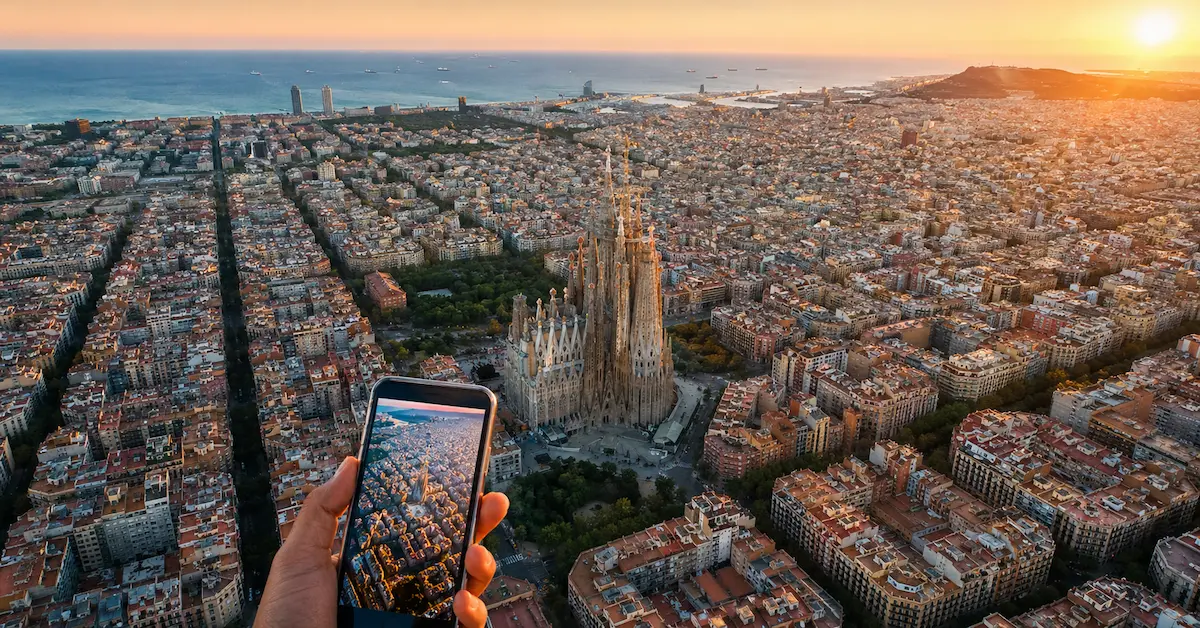

Barcelona has full 5G. It still fails when you need it most. And then — Camp Nou match day, Ramblas in August, Gaudí ticket queue — and your signal is gone. Here's what actually happens.
Barcelona has some of the strongest mobile infrastructure in southern Europe. Movistar, Vodafone, and Orange cover the entire city with 5G. The metro runs 4G on all five main lines — you can use Maps and buy tickets underground on the L1, L2, L3, L4, and L5. Download speeds in the Eixample and Gothic Quarter regularly hit 200+ Mbps.
Barcelona internet is reliable — until peak tourist moments hit.
And then July arrives.
Barcelona receives over 12 million tourists per year — concentrated into June, July, and August. On peak summer days, the same towers serving local residents are simultaneously handling tens of thousands of visitors on the Ramblas, around the Sagrada Família, at Barceloneta beach, and across the Gothic Quarter. The network is there. But when every tourist on the same street is uploading the same sunset at the same time, speed drops sharply for everyone.
There are three moments where your connection breaks — every time.
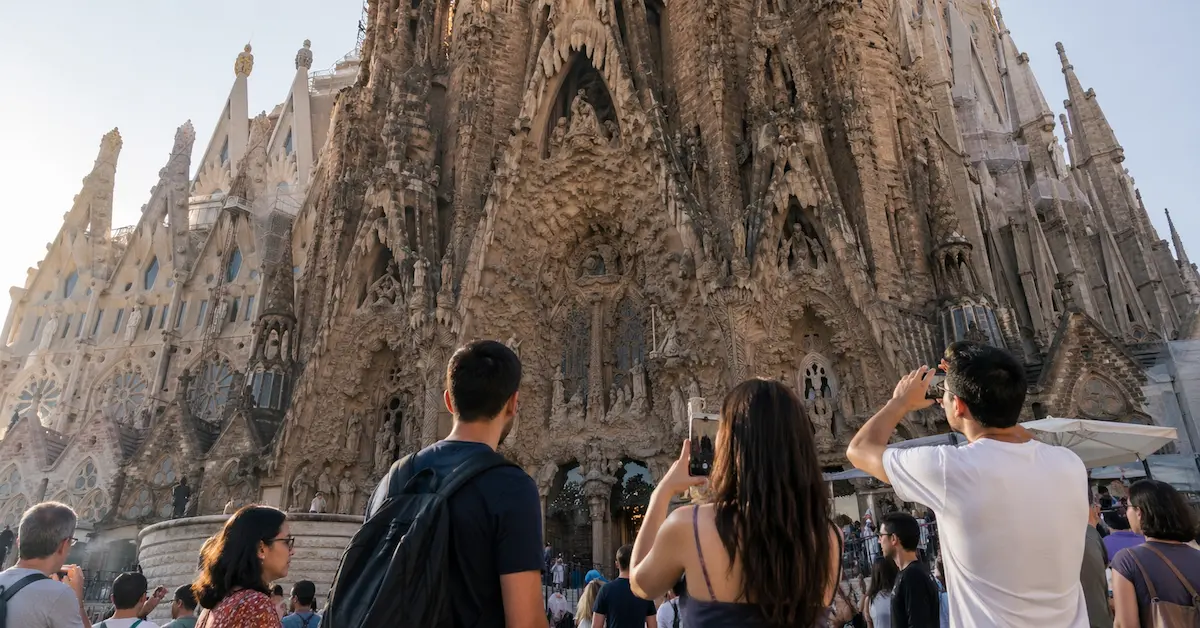
Moment 1: The Sagrada Família ticket queue.
In 2026, entry to the Sagrada Família requires a pre-booked timed ticket. Booking on the spot, at the entrance, on mobile — on the same overloaded tower as everyone else doing the same thing — is exactly where 4G becomes unusable. The correct move: book from your hotel WiFi the night before. But if you’re arriving with no data plan and relying on airport WiFi, you’ll discover the booking requirement standing outside with no connection.
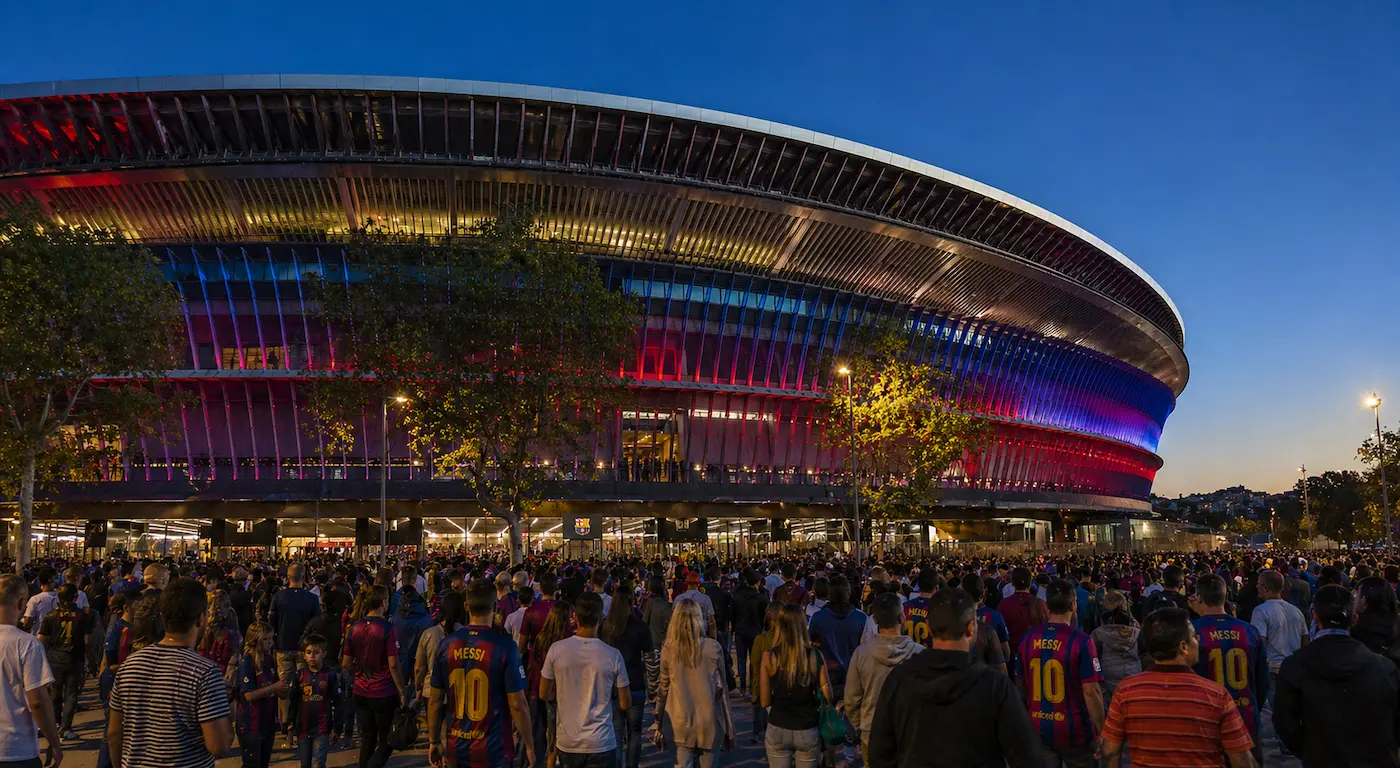
Moment 2: Camp Nou on match day.
FC Barcelona is the most visited attraction in the city. On match days, the Camp Nou area generates severe network congestion — documented by multiple network monitors — as 90,000 people simultaneously use navigation, social media, and messaging from the same geographic area. Even 5G users report slowdowns. Multi-carrier eSIMs, which can switch between Movistar, Vodafone, and Orange when one is congested, handle this better than single-carrier plans.
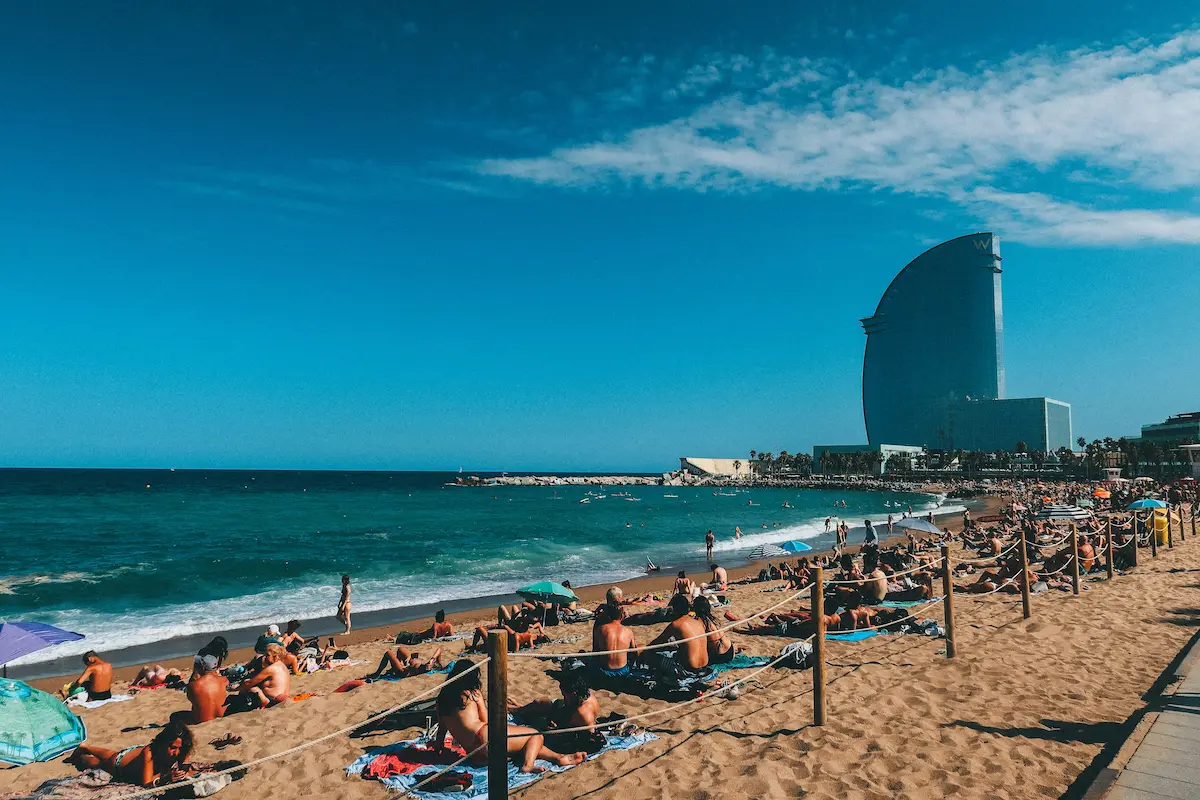
Moment 3: Barceloneta beach in August.
The beach area is narrow, long, and packed. By midday in August, every carrier is under heavy load. Uploading a video from Barceloneta at 2pm on a Saturday in August is the same as uploading from the most congested cell tower in Europe. Download it for later. Post from the hotel.
What This Means for Your eSIM Choice in Barcelona
For Barcelona specifically, the carrier question matters more than in most Spanish cities.
Movistar has the widest infrastructure in Spain and handles congestion better in tourist-heavy areas. Vodafone is strong across central Barcelona. Orange performs well in the Eixample and business districts but can lag in peak tourist areas.
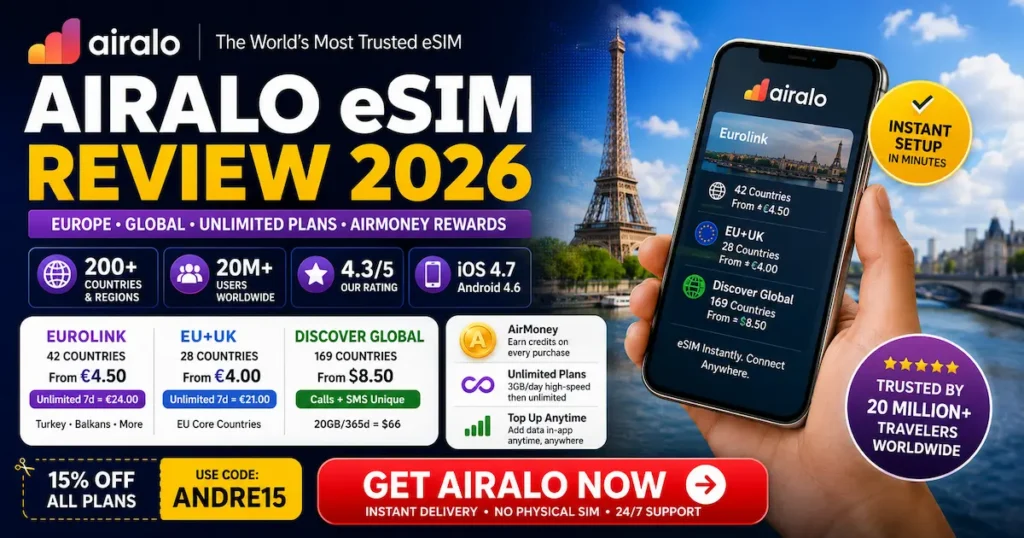
The practical takeaway: a single-carrier eSIM on Orange (like Airalo’s Spain plan) is fine for most of the year. In July and August, multi-carrier access — switching automatically between Movistar, Vodafone, and Orange when one is overloaded — is a genuine advantage.
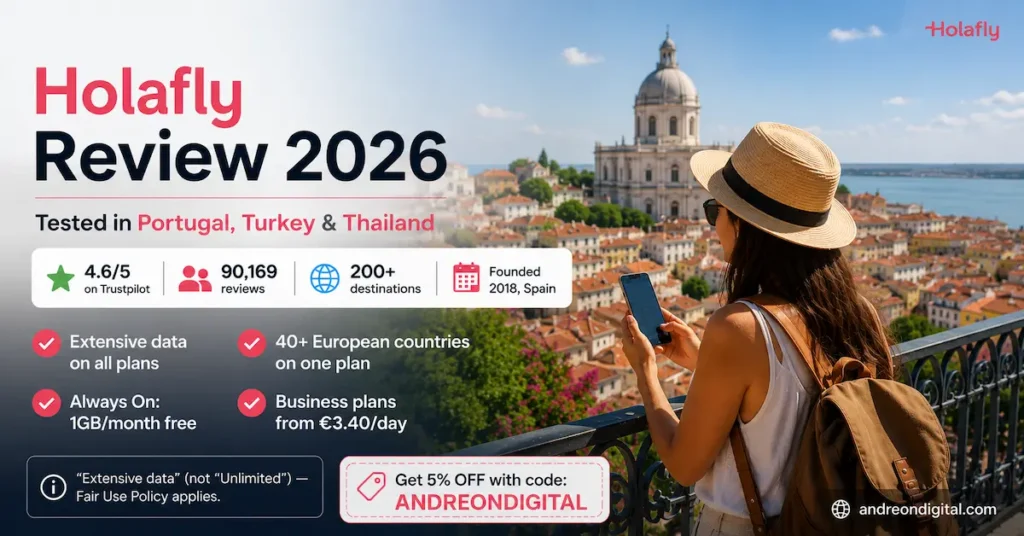
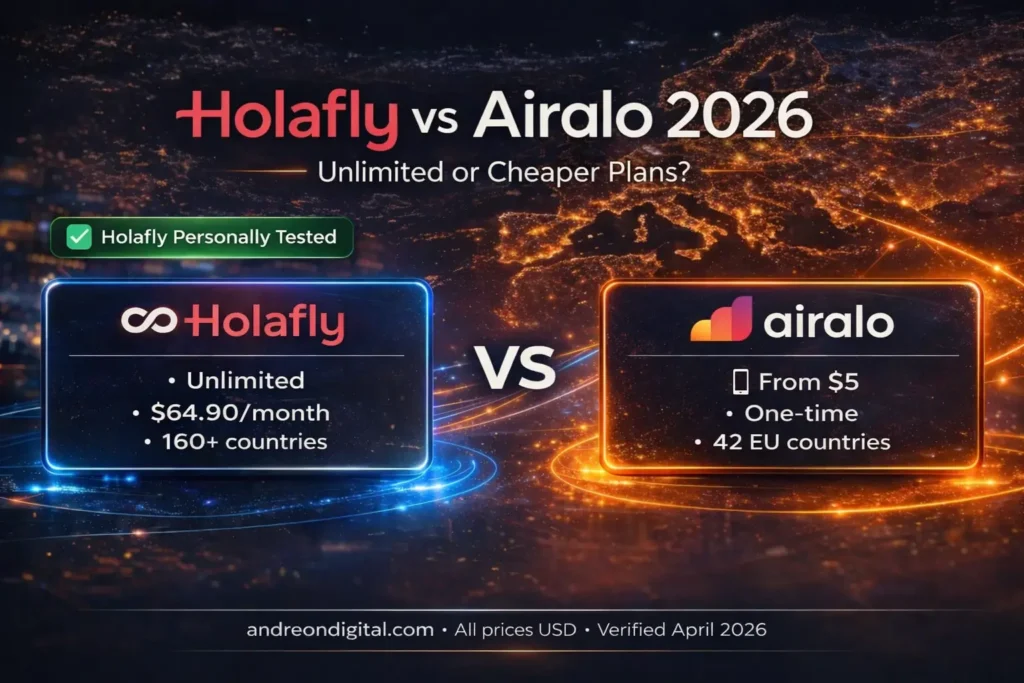
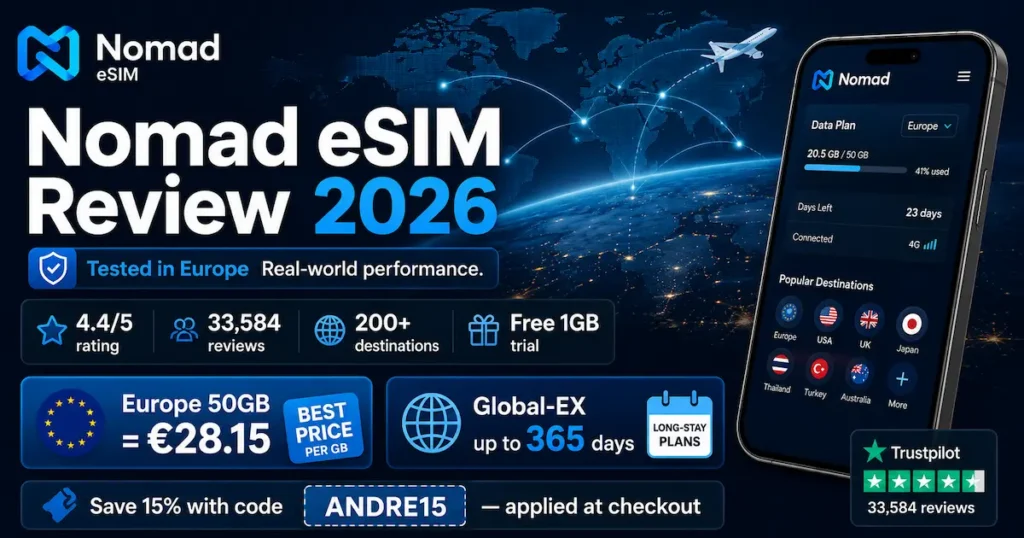
For a Barcelona city break (3–5 days): Nomad’s €12.73/5d unlimited covers a full Barcelona week at the best price, on Movistar+Vodafone+Orange. For heavy content creation or truly zero data anxiety: Holafly’s €26.90/7d on all four Spanish carriers — including Yoigo as a fourth fallback — is the most complete option.
The one thing to do before anything else: download Google Maps offline for Barcelona before leaving home. The metro map works perfectly offline. Offline Sagrada Família, Park Güell, and Gothic Quarter maps mean you never depend on live signal for navigation.
Barcelona Apps That Need a Live Connection
TMB app — Barcelona metro and bus tickets. Digital tickets need live data to load at turnstiles. Download your day’s tickets on hotel WiFi before heading out.
Renfe app — for day trips to Sitges, Montserrat, or the Costa Brava by train. Mobile tickets need data to display at stations. Download them before leaving.
Cabify and Uber — both operate across Barcelona. Real-time location and pricing require live data.
Booking systems — Sagrada Família, Park Güell (timed zones), Casa Batlló, Picasso Museum. All require advance booking that needs a live connection. Do it on hotel WiFi the night before.
Google Translate camera — for menus in non-tourist restaurants in Gràcia, Poblenou, or Sarrià. Uses data. Download the Spanish language pack offline so it works without signal.
Barcelona works perfectly — if you know when it doesn’t. The congestion moments are predictable and avoidable. Knowing when they happen — and having offline backup for the three critical booking moments — is the difference between a trip that flows and one that stalls.
→ Full Spain eSIM comparison — Nomad, Holafly & Airalo with May 2026 prices
Verified May 2026 · andreondigital.com